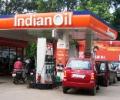
Indian Oil Corporation on Tuesday said it may lose over Rs 25,000 crore (Rs 250 billion) in revenues this fiscal on selling fuel below imported cost.

The government has decided to go ahead with the privatisation of Hindustan Copper Ltd, setting aside concerns over the fate of units, which were partially nationalised.
Sri Lanka has said it will go ahead with its deal with Bharat Petroleum Corporation Ltd in oil retailing in the island nation despite opposition from the Marxist JVP, or People's Liberation Front, in the coalition government.
The strike by workers of state-owned oil firms Hindustan Petroleum Corp and Bharat Petroleum Corp to oppose privatisation of the cash-rich refiners entered the second day on Wednesday but operations and petroleum product supplies remained unaffected.

As much as 8 billion rubles (about Rs 1,000 crore) of dividend income belonging to Indian oil firms is stuck in Russia after the Putin administration clamped down on dollar repatriation, officials said on Friday. Indian state oil firms have invested $5.46 billion in buying stakes in four different assets in Russia. These include a 49.9 per cent stake in Vankorneft oil and gas field and another 29.9 per cent in TAAS-Yuryakh Neftegazodobycha fields.
At least half a dozen national and international oil giants, including Reliance and Royal Dutch Shell, joined the race, on Friday, for acquiring government's 34 per cent stake in Hindustan Petroleum Corporation Ltd.

State-owned Indian Oil Corp, Bharat Petroleum and Hindustan Petroleum are collectively losing Rs 2.65 billion (Rs 265 crore) per day on selling fuel below cost and may end the fiscal with a Rs 874.4 billion (Rs 87,440 crore) revenue loss.
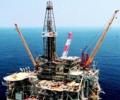
IOC, BPCL and HPCL currently sell petrol at a loss of Rs 6.12 per litre, Rs 4.60 a litre on diesel, Rs 18.42 per litre on PDS kerosene and Rs 265.27 per 14.2-kg LPG cylinder.
The country's oil marketing companies are preparing for another round of increase in the price of aviation turbine fuel on July 1 as the average price of the fuel in international markets has shot up to around $160 per barrel in June from $150 per barrel in May.
In an apparent bid to resolve the row over divestment in public sector units including the one involving HPCL and BPCL, Prime Minister Atal Bihari Vajpayee held an informal meeting of senior Cabinet ministers.\n\n
The oil marketing companies are driving credit growth. The banking sector -- which typically sees credit contraction in the initial months -- has managed to buck the trend and has added nearly Rs 16,000 crore (Rs 160 billion) of advances in the first seven weeks of the current financial year thanks to the demand from the two sectors.
Bharat Petroleum Corp, Hindustan Petroleum Corp and IBP will turn financially sick by next year as losses arising from freeze on fuel prices are set to erode their net worth, according to oil ministry estimates.

The country's biggest fuel retailer Indian Oil Corporation on Wednesday said it is losing Rs 107 crore (Rs 1.07 billion) a day on selling auto and cooking fuel below cost even as it awaits the government to announce clear compensation package.
After three consecutive hikes, state-run oil companies on Thursday reduced jet fuel or ATF prices marginally by about one per cent in tandem with international rates for the same.Indian Oil, Bharat Petroleum and Hindustan Petroleum cut aviation turbine fuel (ATF) price by Rs 311 per kilolitre in Delhi to Rs 31,615 per kl with effect from midnight tonight, an IOC official said.
Reliance Industries Ltd will sell 4.3 million tonnes of petroleum products from its 33 million tonnes Jamnagar refinery in Gujarat to public sector oil retailing companies in 2004-05.
Reliance Industries Ltd, India's sole private sector refiner, on Monday sought Petroleum Minister Ram Naik's help in getting public sector oil companies to buy fuel from its 33 million tonne Jamnagar refinery in Gujarat.
The government on Friday said it will not increase prices of domestic cooking gas (LPG) and kerosene despite the Budget cutting to half the subsidy on the two mass consumed cooking fuels from April 1.

After two months of price cuts, the state-run oil companies on Friday hiked aviation turbine fuel (ATF) price by a steep 6.5 per cent in step with hardening international rates.
The retail losses that the country's oil marketing companies incur on sale of petrol, diesel, cooking gas and kerosene at subsidised prices have risen by 7.3 per cent to around Rs 440 crore (Rs 4.4 billion) per day in the fortnight ended March 31.IOC lost Rs 17 for every litre of petrol it sold, up from Rs 14.65 a litre on March 15. It lost Rs 316 per 14.2-kg cylinder, compared with Rs 303.65 per cylinder in the previous fortnight.
For the second time this month, state-run oil companies on Tuesday cut jet fuel prices to ease the burden on cash-strapped airlines. Aviation turbine fuel (ATF) prices in Delhi was reduced by Rs 649 or 1.6 per cent to Rs 39,319 per kilolitre, effective midnight tonight.
The fuel price revision on Wednesday is likely to wipe out the Rs 1,100 crore net revenue earned by the three oil marketing companies--Indian Oil Corporation, Bharat Petroleum Corporation and Hindustan Petroleum Corporation -- in the last one month, say officials from these companies.
Indian Oil Corporation is India's only Fortune 500 company.
The government is keen on getting global oil majors like Saudi Aramco and National Iranian Oil Corp on board Hindustan Petroleum and Bharat Petroleum through the market route even though privatisation of the state-run oil refining and marketing compa
State-run oil refiners are likely to report profits on daily sale of petrol, diesel, cooking gas and kerosene in the fortnight ending December 31, after average crude oil prices have been nearly 3 per cent lower and the rupee has appreciated 3.2 per cent compared with the first fortnight of this month.
Oil India chief reveals plans of the upcoming IPO and future investment strategies.
Indian Oil Corporation, Bharat Petroleum Corporation Ltd and Hindustan Petroleum Corporation Ltd are projected to lose around Rs 1,15,500 crore (Rs 1,155 billion) during the year as they sold petrol, diesel, kerosene and cooking gas at below production costs when crude oil prices rose steadily between April and July this year to reach a peak of $147 a barrel in early July.

IOC along with its sister PSUs, Bharat Petroleum Corp and Hindustan Petroleum Corp had from September 16 cut jet fuel rates by as much as 3.2 per cent to Rs 37,896.83 per kl.

Key infrastructure sectors -- from railways to power, and from coal to petroleum -- will not only be part of the achievements but promises too, as the BJP fights to get a third term at the Centre.
Public sector oil firms have seen losses on fuel sale widening to about Rs 170 crore (Rs 1.7 billion) per day on firming international oil prices and may end the fiscal with over Rs 49,000 crore (Rs 490 billion) in revenue loss.
GAIL (India) Ltd and its partners on Wednesday signed the Exploration and Production Sharing Agreement with government of Oman for Block 56 in Muscat.
The hike comes on back of over 12 per cent hike on June 15. ATF price on that day were raised by Rs 3,949 to Rs 36,252 per kilolitre in Delhi.
In a bid to break the virtual deadlock over privatisation programme, Divestment Minister Arun Shourie on Friday met Deputy Prime Minister L K Advani.
